
 2026 IEEE International Conference on Image Processing


Computational Imaging: From Explicit Priors to Learned Restoration Operators
Abstract: Computational imaging problems are traditionally formulated as ill-posed inverse problems, where prior knowledge is essential for recovering high-quality images from limited or corrupted measurements. Classical approaches rely on explicitly defined priors, leading to optimization problems that are mathematically principled but often limited in their ability to capture the complexity of real-world data.
In this talk, I will argue that recent advances in generative modeling are driving a fundamental shift: from explicit priors to learned restoration operators that implicitly encode data distributions. Rather than specifying a prior as a function, we now access it through learned models that can be queried but not explicitly written down. This perspective reframes inverse problems as the design of iterative algorithms that interact with these operators.
I will present an optimization-centric view that connects classical proximal methods, plug-and-play algorithms, and modern generative models within this operator-centric framework. I will highlight three key ideas: (i) general restoration operators implicitly define priors, (ii) stochasticity can be used as a principled tool to improve optimization behavior in highly ill-posed problems, and (iii) priors can be learned directly from measurements without access to clean training data. The talk will cover both the theoretical foundations of these ideas and their applications in biomedical image reconstruction.
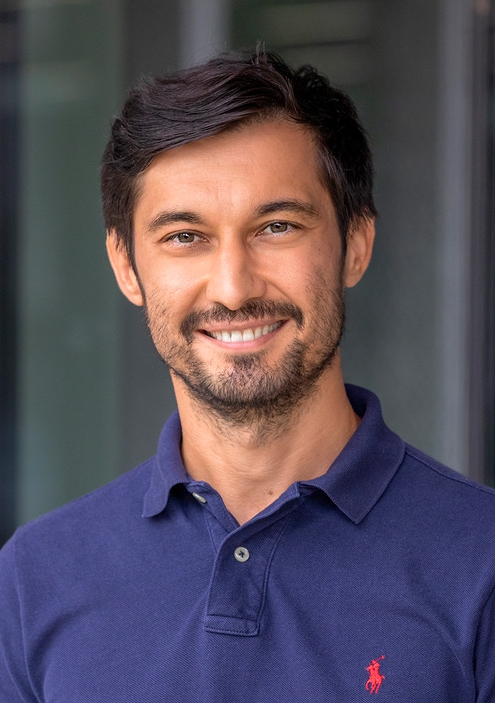
Bio: Ulugbek S. Kamilov is the Leon and Elizabeth Janssen Associate Professor of Electrical and Computer Engineering at the University of Wisconsin–Madison. From 2017 to 2025, he was with Washington University in St. Louis, where he was the Donald L. Snyder Associate Professor of Electrical and Systems Engineering and Computer Science and Engineering. He was previously a Research Scientist with Mitsubishi Electric Research Laboratories, Cambridge, MA, USA. He has held visiting positions at Carnegie Mellon University, MIT, Stanford University, École Normale Supérieure, and Google Research. He received the B.Sc. and M.Sc. degrees in Communication Systems in 2011 and the Ph.D. degree in Electrical Engineering in 2015 from the EPFL, Lausanne, Switzerland. Dr. Kamilov is a recipient of the IEEE Signal Processing Society Pierre-Simon Laplace Early Career Technical Achievement Award (2024), the IEEE Signal Processing Society Best Paper Award (2017), the NSF CAREER Award, and the Outstanding Teaching Award from the Department of Electrical & Systems Engineering at Washington University (2023). He was selected as a Fellow of the Scialog initiative on Advancing Bioimaging (2021), and his Ph.D. thesis was a finalist for the EPFL Doctorate Award (2016). He is serving on the IEEE Signal Processing Society’s Bioimaging and Signal Processing Technical Committee. He has previously served as a Senior Member of the Editorial Board of IEEE Signal Processing Magazine, an Associate Editor of IEEE Transactions on Computational Imaging and on IEEE Signal Processing Society’s Computational Imaging Technical Committee.