Time: Wednesday, 16 September 2026, 3:00 PM – 4:00 PM
Moderator:
– Balu Adsumilli, Google

 2026 IEEE International Conference on Image Processing


Time: Wednesday, 16 September 2026, 3:00 PM – 4:00 PM
Moderator:
– Balu Adsumilli, Google
On SMPTE-2094-50: A new dynamic metadata standard for HDR, Chris Cameron, Google
Integrating high dynamic range (HDR) content into composited systems and dynamic viewing conditions has proven difficult because initial standards were focused on viewing a single content source in a theater-like environment. This talk discusses how SMPTE ST 2094-50 addresses these challenges by introducing metadata for an HDR reference white anchor and by characterising HDR content and displays by their HDR headroom.
Benchmarking UGC video quality assessment beyond mean opinion scores, Yilin Wang, Google
The rapid expansion of User-Generated Content (UGC) underscores the need for robust Video Quality Assessment (VQA) models with practical applicability. Existing No-Reference (NR) VQA metrics excel at evaluating absolute video quality across varied content (inter-content accuracy). However, they often struggle to distinguish fine-grained quality variations—such as those caused by compression or enhancement—among variants originating from the same source (intra-content accuracy). To overcome these limitations and accelerate research in fine-grained UGC quality evaluation, this talk presents the UGC Fine-grained Quality (UGC-FQ) Dataset. This large-scale benchmark contains 700 distinct source videos with 36 compression and enhancement variations per source, accompanied by comprehensive subjective quality annotations for both inter- and intra-content differences. Additionally, we introduce an enhanced UGC Video Quality (UVQ) training framework engineered to enable NR-VQA models to reliably measure both overall perceptual quality and subtle quality nuances.
AI extension layer on standard codecs, In-Suk Chong, Jianle Chen, Debargha Mukherjee, Google
This talk will present the challenges in AI based video compression, and propose a middle-ground scalable coding approach where the base layer is conventionally coded while the enhancement layer is AI based. This model can be deployed today with some benefits while still leaving ample room to grow into a full AI codec in the future as the technology becomes more mature.
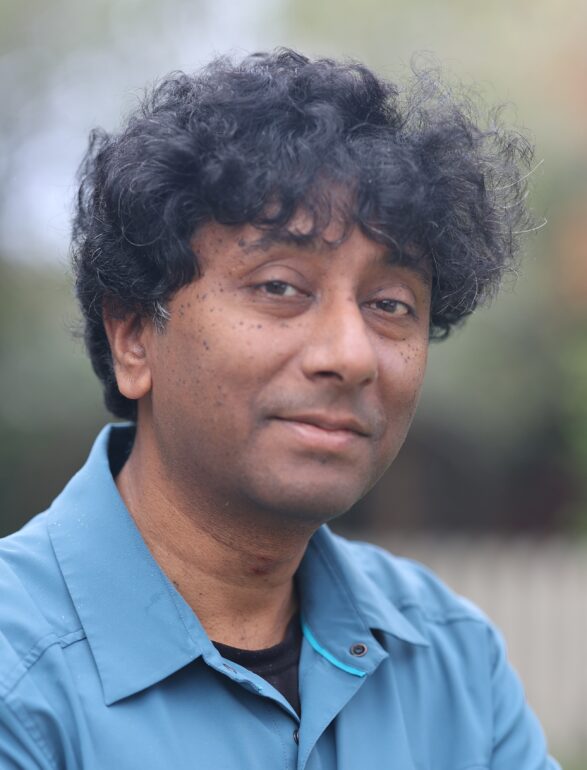
Dr. Debargha Mukherjee received his M.S./Ph.D. degrees in ECE from University of California Santa Barbara in 1999. Since 2010 he has been with Google LLC, where he is currently a Principal Engineer in YouTube involved with codecs and formats strategy. Previously he led next generation video codec research and development efforts for AV1 and AV2. Prior to Google he was with Hewlett Packard Laboratories, conducting research on video/image coding and processing. Debargha has made extensive research contributions in image and video compression throughout his career, and has (co-)authored more than 150 papers and holds more than 200 US patents, with many more pending. He has served on many IEEE Transactions editorial boards and technical committees over the years. He is a Fellow of the IEEE.

Dr. Balu Adsumilli is currently the Head of Media Algorithms group at YouTube/Google, leading transcoding infrastructure, audio/video quality, and media innovation at YouTube. Prior to this, he led the Advanced Technology group and the Camera Architecture group at GoPro. He received his masters at the University of Wisconsin Madison, and his PhD at the University of California Santa Barbara. He has co-authored more than 120 papers and 100 granted patents with many more pending. He serves on the board of the Television Academy, on the board of NATAS Technical committee, on the board of Visual Effects Society, on the IEEE MMSP Technical Committee, and on ACM MHV Steering Committee. He is on TPCs and organizing committees for various conferences and workshops, and currently serves as Associate Editor for IEEE Transactions on Multimedia (T-MM). His fields of research include image/video processing, audio and video quality, video compression and transcoding, video ML/AI models, Generative AI, and related areas.
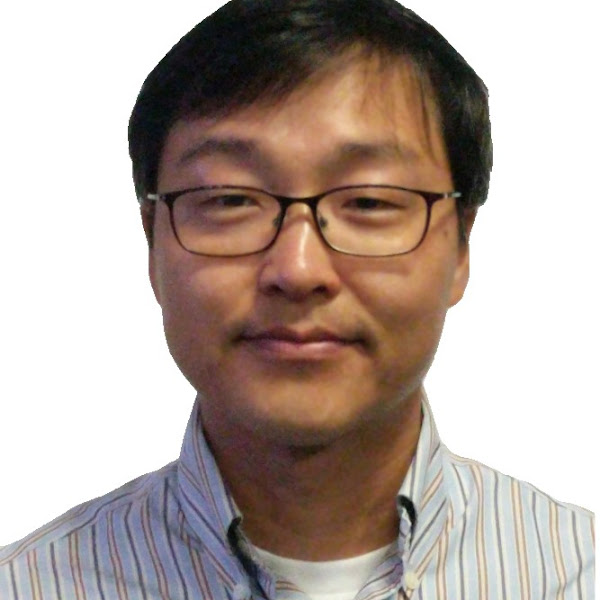
Dr. In Suk Chong is Video Codec Lead at Google; he also holds the co-chair of Hardware SubGroup at AOMedia. Prior to his tenure at Google, He worked at Qualcomm from 2008 to 2017 as the Video Codec Lead, spearheading advancements in video compression technology. In Suk holds a B.S. in Electrical Engineering from Seoul National University (1998) and earned his MS/Ph.D. in Electrical Engineering from the University of Southern California (USC) in 2004 and 2008, respectively.
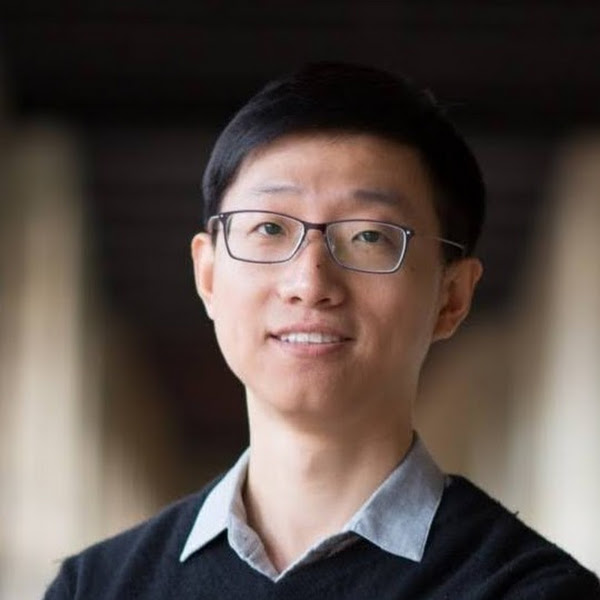
Yilin Wang is a Staff Software Engineer with the Media Algorithms team at YouTube/Google. For the past twelve years, Yilin has centered on advancing video quality assessment, video enhancement, image/video processing, compression, transcoding, and production infrastructure optimization. He received his Ph.D. in Computer Science from the University of North Carolina at Chapel Hill in 2014, with a specialization in computer vision and image processing.

Christopher Cameron is a Software Engineer at Google, where he focuses on high dynamic range image and video rendering. He is an active contributor to standards organizations, including the World Wide Web Consortium (W3C), ISO/TC 42 (Photography and Imaging Standards), the International Color Consortium (ICC), and the Society of Motion Picture and Television Engineers (SMPTE). Prior to his tenure at Google, he was a Software Engineer at NVIDIA, contributing to the CUDA API. He holds an MS in Computer Science from UC Berkeley and a BS in Computer Science and BA in Mathematics from the University of Illinois Urbana-Champaign.
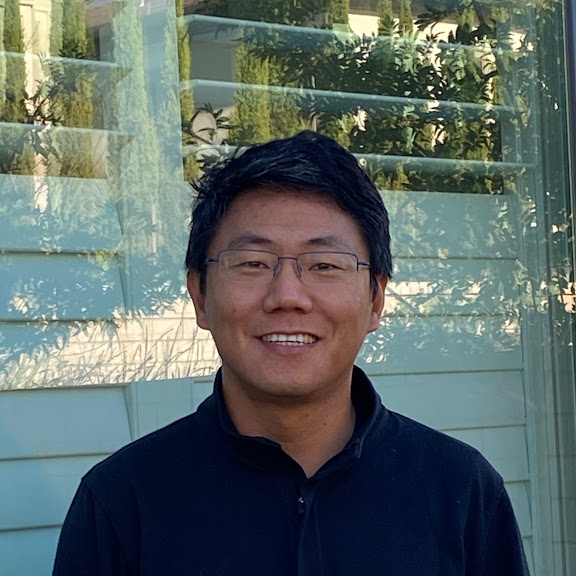
Dr. Jianle Chen received his B.S. and Ph.D. degrees in EE from Zhejiang University, Hangzhou, China, in 2001 and 2006, respectively. He is a software engineer in the Open Video team at Google since 2021, working on AOMedia’s next generation video codec research and development efforts. He was formerly with Samsung Electronics Company Ltd., Qualcomm Technologies, Inc., San Diego, CA, USA, focusing on the research of video technologies. Since 2006, he has been actively involved in the development of various video coding standards, including the VVC and HEVC standards, and their extensions in the Joint Video Experts Team (JVET).